
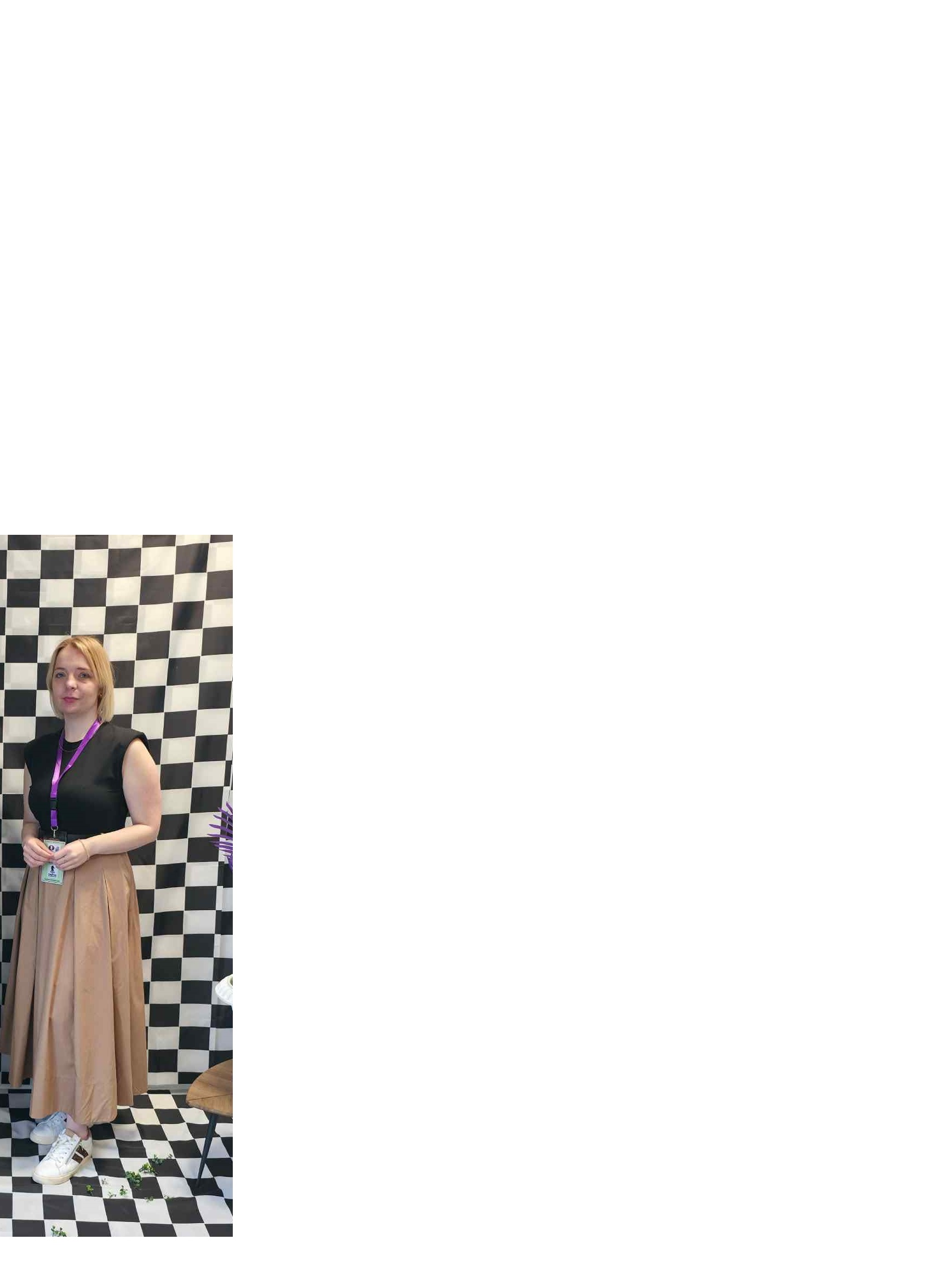
I, Rimma Shkrabina, first met speech therapist Evgenia Sharomova quite recently — thanks to her mother, Elena Sharomova. I already knew Elena not only as a successful entrepreneur in the honey industry, but also as a passionate chess player. Later, after watching an interview Evgenia gave to local television, I discovered that this practicing speech therapist had also been a New Zealand chess champion in various years and age categories. At that point, it became clear that her story deserved to be told. I was delighted when Elena agreed to help with this article, while Evgenia kindly added details and clarified parts of the story herself.
Let us begin with Elena Sharomova and her memories of her daughter and their family. “In 1998, my husband and I left Vladivostok on a round-the-world yacht voyage, taking our little daughter Zhenya with us. At the time, we spoke almost no English and knew no other foreign languages. In every foreign port where we stopped, we searched for a children’s chess club. We would ask local people to write down the name and address of a club on a piece of paper, then show it to passersby to help us find our way there. Somehow, we always managed to arrive without difficulty.”
Evgenia adds: “I would also like to mention my father. Dmitry Sharomov graduated from the Maritime Academy and worked as a second mate. He was able to organize this round-the-world journey for our family because the yacht’s captain needed someone with professional navigation experience.”
Elena continues: “Something truly magical happened in those chess clubs . Children who met over a chessboard would begin communicating despite the language barrier. They used gestures, a few English words, and expressions from their own languages. Our daughter quickly picked up local words, while the other children started learning Russian. It became a wonderful ‘soup’ of languages that somehow allowed them to understand one another perfectly. They were genuinely happy together.
“Before long, people began inviting us into their homes, showing us around their cities, and offering to take us on trips across the country. Local families enjoyed spending time with us, while we immersed ourselves in their culture.”
Chess also played a decisive role in Evgenia’s education.
“We faced a real crisis when our yacht broke down in Australia, forcing us to stay there far longer than planned. Yet chess helped us overcome every obstacle. Even though we held only visitor visas, Zhenya was able to study free of charge at very expensive Catholic private schools. Then came tournaments, competitions, trips to different cities, and a growing circle of friends and acquaintances.
“Later, in New Zealand, chess again played a crucial role in her life. Thanks to her achievements, she received citizenship a year and a half earlier than expected and was able to attend an excellent private school in Auckland almost free of charge.”
Watching her daughter grow, Elena came to realize that chess is far more than simply a game.
“It is a language — a way of communicating on another level, much like music. Chess helps players sense and understand their opponent and express themselves as individuals.
“At one point, Zhenya even held a simultaneous exhibition on fifteen boards as a protest against bullying at a university in Christchurch. Afterwards, she gave an interview comparing simultaneous chess play with bullying: when it feels as though everyone is against you, it is important to remain calm, stay in control, refuse to give up, continue playing, and keep focused.”
Evgenia recalls: “My parents taught me chess before I turned four. As long as I can remember, I have always loved it.”
Rimma Shkrabina Allow me to add a few facts about Evgenia’s achievements.
Evgenia Sharomova was New Zealand Junior Champion in the Under-16 category in both 2002 and 2003, and later became New Zealand Women’s Champion in 2005. She currently serves on the board of the New Zealand Chess Federation. She is also a nationally licensed coach and arbiter, as well as a member of the FIDE coaching community.
The New Zealand press has written about her on numerous occasions, and she has appeared in television interviews. We ourselves previously published an article about Evgenia based on a feature in the New Zealand Herald in Issue No. 96 (2019).
Yet beyond chess, Evgenia is also a highly qualified practicing speech-language therapist. She holds a Master’s degree in Speech-Language Therapy and a Bachelor of Science degree from the University of Auckland.
The connection between Evgenia the accomplished chess player and Evgenia the successful and sought-after speech therapist is truly remarkable.
I has long been known that chess can have a surprisingly positive effect on people with developmental and cognitive challenges and can become a powerful therapeutic tool in the hands of an experienced speech therapist. While preparing this article, I explored a great deal of material online, and several important themes emerged.
— Chess functions not only as a game, but also as a therapeutic and educational tool. It helps develop speech and communication skills, enriches vocabulary through concepts such as pieces, squares, movement, diagonals, attack, and defense. Children learn to form phrases and explain their actions: “I move the rook forward two squares.” Discussing games with teachers or peers encourages dialogue and conversational speech. — Chess strengthens attention and memory. The game requires concentration, retention of rules, and sequencing of moves. Children train working memory by remembering where pieces stand and what moves have already been made. — Chess develops logical and spatial thinking. Many children with developmental challenges struggle with abstract concepts. Chess gradually builds an understanding of cause and effect — “if I move here, my opponent can capture my piece” — as well as spatial orientation such as left and right, forward and backward, and diagonals. — Chess supports emotional development. Waiting for an opponent’s move teaches patience. Experiencing victory and defeat in a safe environment helps children learn emotional regulation and respect for rules. — Chess increases motivation through play. Unlike repetitive exercises, chess naturally sparks interest. Speech therapists can creatively incorporate chess pieces into articulation exercises: “The rook moves straight ahead — now let’s stretch the ‘L’ sound,” or “The knight jumps — let’s make our tongue jump too.” — Chess encourages socialization. Playing in pairs promotes communication, cooperation, and interaction with others.
It is hardly surprising that Evgenia chose speech-language therapy as her profession. Her unique chess experience, combined with outstanding professional training, opened up broad opportunities to help both children and adults. This remarkable combination continues to produce excellent results. She is especially valued for her logical thinking, creativity, and ability to handle highly complex cases effectively.
Recently, with Evgenia’s active involvement, the New Zealand Chess Federation organised a special tournament called Chess for Champions of Determination. The event was designed for children and adults with disabilities, as well as participants diagnosed with autism spectrum disorder (ASD), Down syndrome, ADHD, or cognitive delays.
As both Evgenia and her mother later explained, organising the tournament required enormous effort, time, and energy. Yet it proved more than worthwhile: the event was a tremendous success and attracted even more participants than expected.
More information about the tournament and its results can be found on the event’s Facebook pages: https://www.facebook.com/share/p/1AJBtymX6K/ and: https://www.facebook.com/share/p/1DHjLyvSBg/
Finally, Evgenia shared a few words about her free time and personal interests:
“I try to go to the gym in the mornings and I love reading. To save time, I listen to audiobooks while driving. I also enjoy cooking and meeting new people. But somehow there is still never enough time for everything.”
Rimma Shkrabina. All that remains is to wish Evgenia continued success in her many-sided work — both in chess and in helping children with speech and communication challenges. And may she also find enough free time for all her old and new passions alike.
Translated by Elena Naumova