
Sambo is a traditional martial art with deep roots and a rich history. Developed in the 1920s, it combines elements of various national wrestling styles, including kurash, chidaoba and judo. Originally created as a practical self-defense system, its name reflects its purpose: SAMBO stands for “self-defense without weapons.”
For many, the first encounter with sambo comes in youth. Some train briefly for personal development, while others dedicated years to mastering the sport. Despite its long history, sambo remains relatively undeveloped outside the former USSR. However, dedicated practitioners can be found worldwide — from Japan and the United States to countries across Africa, where both sport and combat sambo continue to grow.
In New Zealand, a small but passionate community is working to develop and promote the sport. Interest is steadily increasing, even though competitions are still limited.
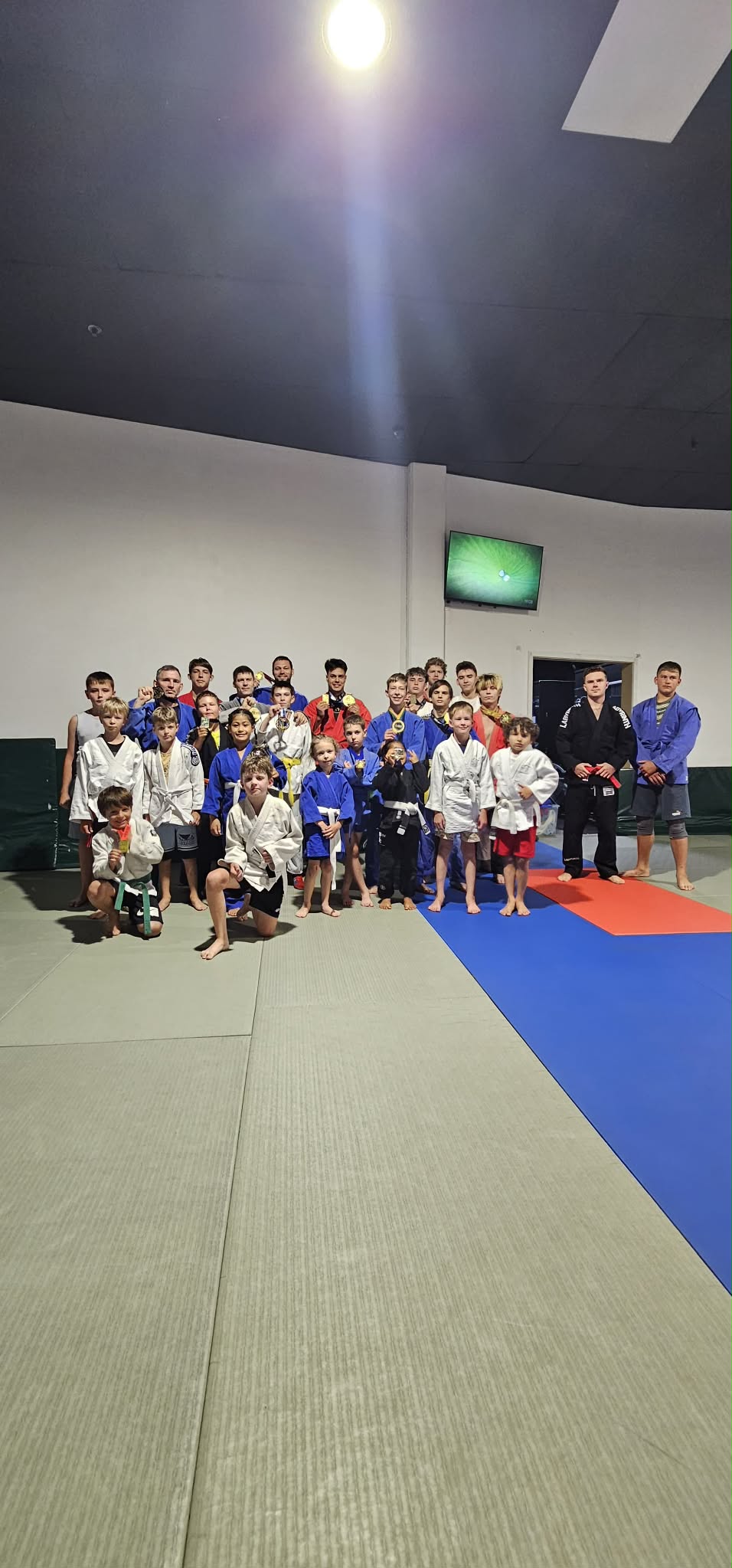
One notable example is Auckland Sambo Club. Led by experienced coaches Denis Kuzmenko and Andrei Polyakov, the club focuses not only on technical excellence but also on building character, discipline and respect for martial arts — values that are sometimes overlooked elsewhere. In many ways, it represents a return to a more traditional, “old school” approach to training.
The club began in modest circumstances, sharing space within a local judo facility. From the outset, its coaching philosophy placed strong emphasis on both standing throws and a wide range of groundwork techniques. Within just three to four years, this approach has produced athletes who now regularly succeed in judo and Brazilian jiu-jitsu competitions.
A key principle of the club is that only athletes who are ready to compete for medals take part in tournaments. Sending unprepared beginners onto the mat can lead to injury and discouragement. Success depends not only on coaching , but also on the athlete’s own commitment to improvement and willingness to be part of a high-performing team.
Today, around 30 athletes train regularly at the club, with about half competing. At the most recent New Zealand Judo Championships in Christchurch last October, 10 club members took part despite the challenges of travel. The results were impressive: six gold medals, three silver and one bronze.
Over the past two years, every club member has returned from competition with a medal. At a Wellington tournament last June, Auckland Sambo Club achieved the best overall result, winning eight gold medals out of a possible eleven – a remarkable achievement for a club that is only four years old.
The club already counts several New Zealand champions among its members, including Alexey Kuzmenko, Matvey Sukhovei, Alexander Morozov, Danil Taran, Nikita Ustinov, Rostislav Pyzhyanov and Vadim Pyzhyanov. Many athletes have reached the podium at national level for the first time only recently.
Special recognition should be given to coach Andrei Polyakov, who leads the groundwork programme. Under his guidance, athletes have achieved outstanding results in jiu-jitsu competitions, with multiple gold medals won by fighters such as Alexander Morozov, Nikita Ustinov, Matvey Sukhovei, Timur Narkulov, Danil Taran and his father Alexander Taran, Bogdan Vovchenko and Tikhon Varlamov.
Among the club’s members is a rising young talent, Akillea Hennessey. At just seven years old, she has already won dozens of jiu-jitsu competitions in her age group, both in New Zealand and internationally. She is an Oceania champion and, last December, claimed two gold medals at the World Championships in Dallas, USA. Competing against both girls and boys in New Zealand, she has remained undefeated for two years – an achievement that reflects not only her talent but also the strength of the coaching environment around her. This year, she will also begin competing in judo. New Zealand, watch out!
The success of Auckland Sambo Club has not gone unnoticed. Athletes and coaches from other clubs increasingly study the techniques and movement patterns demonstrated by its members at competitions – a clear sign of respect for the club’s high standards.
Behind these results lies consistent, demanding work. As in any wrestling discipline, coaches must be firm and disciplined in developing strong, resilient athletes. Praise during training is rare, but it is balanced by genuine care and an individual approach to each student.
In 2025, the club entered a new stage of development, moving to a larger training facility. While the new space offers improved conditions, the club continues to seek a permanent venue where mats can remain in place and training can run six days a week, with multiple sessions per day and opportunities to host small tournaments for children and beginners.
To support its athletes and further development, the club has begun applying for sports grants – a time consuming and complex process. Volunteers play a crucial role in this effort, contributing their time and energy to the club’s growth.
The club welcomes all forms of support, from sponsorship and donations to equipment such as mats, ropes and weights.
Although originally established within the CIS community, Auckland Sambo Club now attracts a diverse group of athletes, including many local New Zealanders. Parents often note the high level of discipline compared with other clubs. The club is open to children and adults of all ages, abilities and backgrounds.
The coaches themselves are volunteers, driven by their passion for the sport. They dedicate several evenings each week to training, often spending hours setting up equipment, leading sessions and supporting athletes. The sense of community within the club — among athletes, families and supporters — is one of its defining strengths.
As a Hamilton resident, I travel regularly to Auckland to train with the club. Despite the distance, the experience is worth it. Auckland Sambo Club is not just a place to train — it is a community that inspires commitment, discipline and excellence.
Vadim Pyzhyanov, Hamilton (translated by Elena Naumova)