
When the competition “Bridges Across the Ocean: London Meets New Zealand” was announced last year, I initially had no desire to take part — none whatsoever. Yet somehow my mind began working in the background, searching for connections between three countries: the United Kingdom, New Zealand, and Russia. Connections related to one particular person — myself. That, after all, was exactly what the competition required.
Gradually, almost without my noticing, a story began to take shape. Piece by piece it gathered details until it finally turned into this text — an unexpected reflection inspired by the theme of the competition.
When I was at school, geography was one of my favourite subjects. The kind of geography that introduced us to “cities and countries, parallels and meridians” and allowed us — at least in our imagination — to travel around the world. Even as a child growing in Siberia, I loved that sense of exploration. Over time, my fascination with those imaginary journeys eventually became something very real: the opportunity to travel and see the world for myself.
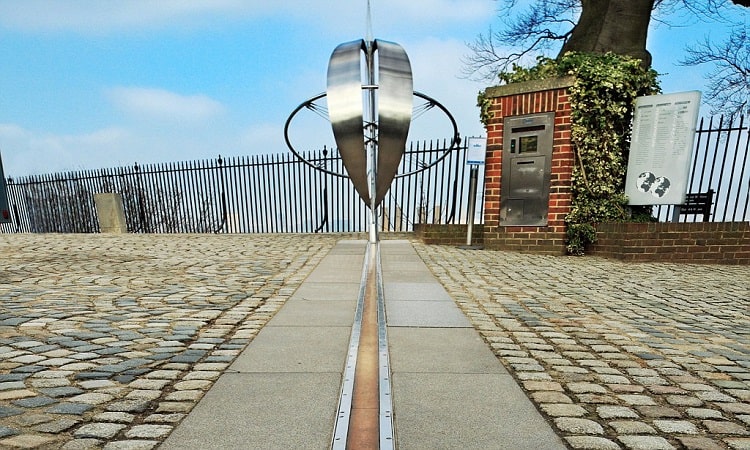
So when a trip to London appeared on my personal itinerary, there was one place I particularly wanted to visit — Greenwich. The name itself had fascinated me since childhood. It immediately brings to mind the Greenwich Meridian and the Royal Observatory in Greenwich, through which the zero-degree longitude line passes (see photo).
Standing there in person felt almost surreal. These were words and concepts that had seemed distant and abstract when I first learned them at school. As a child, I could never have imagined that one day I would actually stand in the place they referred to.Alongside that childhood curiosity came another interest that developed later in life: the historical connections between the United Kingdom and New Zealand, where I now live. In particular, the legacy of James Cook, who charted the coastline of New Zealand and provided Europe with its first accurate map of the islands. A monument to James Cook (see photo) stands not far from Greenwich. Dreams, it seems, really do come true.And so the thread of the story gradually leads us to New Zealand. Here the imagination can wander quite freely: it is not difficult to explain what connects these two countries — the United Kingdom and New Zealand. I will simply continue with the same geographical theme and mention a few place names that can be found in both London and Auckland. These are not random coincidences; they reflect the shared history of the two countries. I will limit myself to geographical names only. In order not to tire the reader with a long list, I will give just a few examples from London and Auckland, adding brief comments to each. Such explanations might not even be necessary, as these references are familiar to many people around the world, not only to those who live in these cities and countries. Nevertheless, I decided to leave them in:
- Victoria Street / Road / Avenue – in honour of Queen Victoria
- Albert Street / Road – in honour of Prince Albert, Queen Victoria’s husband
- Wellington Street / Road / Lane – in honour of Arthur Wellesley, 1st Duke of Wellington, victor over Napoleon at the Battle of Waterloo
- Nelson Street /Road / Crescent – in honour of Admiral Nelson, hero of famous naval battles
- Richmond Road / Street – named after Richmond, London, once associated with a royal residence
- Cambridge Street / Terrace – referring either to the title of the Dukes of Cambridge or to the city of Cambridge
- Oxford Street – named after the city of Oxford and its famous university
- Bond Street – associated with Sir Thomas Bond, a 17th-century landowner
- Clarendon Street – in honour of Edward Hyde, 1st Earl of Clarendon, a 17th-century statesman
- Ponsonby Road / Street – named after the British aristocratic Ponsonby family.
And this is only a small fraction of the shared names that commemorate notable figures or places connected with the history of the British Empire. Perhaps it is time to stop here…
Finally, a small postscript. In London there are several place names that recall historical links with Russia: Moscow Road and St Petersburgh Place are examples from the past. In more recent decades the city has even acquired an unofficial nickname — “Londongrad.”
In Auckland, there are no geographic names connected with Russia. Only a few elsewhere in New Zealand come to mind: Volga Street in Wellington and Petersburg Drive in Hamilton. (Incidentally, Hamilton itself was named after Captain John Fane Charles Hamilton, a British naval officer.)
Russia, in turn, also preserves place names reflecting connections with the United Kingdom and New Zealand. In Saint Petersburg, for example, there are English Embankment and London Street. There is also a New Zealand Street in the settlement of Mirny in Murmansk Oblast.
Looking back at this small geographical journey, I cannot help but marvel at how three different corners of the world can be connected through nothing more than personal experience and a handful of place names.
And thus the story comes full circle.
Rimma Shkrabina, Auckland